Column · @eduardonnpj144
Gutter Cleaning Hackettstown for Better Rainwater Flow
Rainwater is easy to ignore when everything is working. It lands on the roof, runs into the gutters, drops through the downspouts, and disappears where it is supposed to go. When that path gets blocked, the problems start quietly. Water spills over the front edge, backs up under shingles, stains siding, pools near the foundation, and turns one storm into a chain reaction. In a place like Hackettstown, where homes see heavy spring rains, summer downpours, falling leaves in autumn, and winter freeze-thaw cycles, that chain reaction happens faster than many homeowners expect.
That is why Gutter Cleaning Hackettstown is not a cosmetic service. It is basic water management for the house. Clean gutters do more than look better from the curb. They protect fascia boards, preserve landscaping, reduce ice dam risk, and help direct runoff away from basements and crawl spaces. Most of the serious damage linked to neglected gutters starts small enough to miss from the ground. A bit of overflow near one corner. A damp mulch bed that never quite dries. A dark streak beneath a seam. Left alone, those details become repairs.
Homeowners usually call for cleaning after they notice a symptom. The better approach is to think about the system before it fails.
Why rainwater flow matters more than people think
A roof sheds an enormous amount of water during even a moderate storm. On a typical single-family home, one inch of rain can translate into hundreds of gallons moving off the roof in a short window. Gutters are there to collect that volume and slow it down just enough to guide it safely to the downspouts. If the channel is packed with wet leaves, seed pods, pine needles, or roof grit, it stops acting like a drainage system and starts acting like a trough.
In Hackettstown, that matters because the weather pattern is rarely gentle for long. A week of dry conditions can be followed by a sudden hard rain. Debris that seemed harmless when dry turns dense and heavy when saturated. It forms dams at the corners, over the outlets, and near seams. Water then takes the shortest path out, which is usually over the gutter edge and straight down along the house.
I have seen homes where the gutter itself was still structurally sound, but overflow had already done the expensive work. Soil had washed away below the dripline. Mulch had migrated into walkways. Splashback had marked the siding in vertical bands. In one case, the homeowner thought they had a roofing problem because of a stain on an interior wall. The real issue was a downspout outlet clogged with compacted maple leaves. Water had backed up under the roof edge during storms and found its way into the sheathing.
The lesson is simple. Water does not need a dramatic opening to cause damage. It only needs repetition.
What tends to clog gutters in Hackettstown
Local conditions shape the kind of buildup a gutter system sees. In and around Hackettstown, mature trees are one of the biggest factors. Oak, maple, and pine each create their own kind of mess. Broad leaves blanket the runs in fall, while pine needles can collect year-round and weave together into mats that are surprisingly hard to flush out. Add twigs, helicopter seeds, roof granules, and the occasional tennis ball from the yard, and the gutter becomes less of a channel and more of a compost tray.
Shaded sections often stay damp longer, which encourages debris to break down into a muddy layer. That muck is especially common near the outlets, where the shape of the gutter naturally traps material. Once it settles there, rainwater carries fine grit into it and packs it tighter. People are often surprised by how heavy that material gets. A gutter can look only partially filled from the ground while holding enough saturated debris to strain the hangers and pull the run slightly out of pitch.
Pitch is a detail worth mentioning because it affects flow even when the gutter is technically clear. Gutters are installed with a subtle slope toward the downspouts. Over time, weight, movement, and loosened fasteners can flatten that slope or create a low spot. Then the system holds standing water. Standing water attracts mosquitoes in warm weather, adds weight after storms, and speeds corrosion in older metal gutters. Cleaning helps, but it also reveals whether the system is draining the way it should.
The hidden costs of putting it off
Neglected gutters rarely fail all at once. More often, they create a slow accumulation of repair issues in different parts of the property.
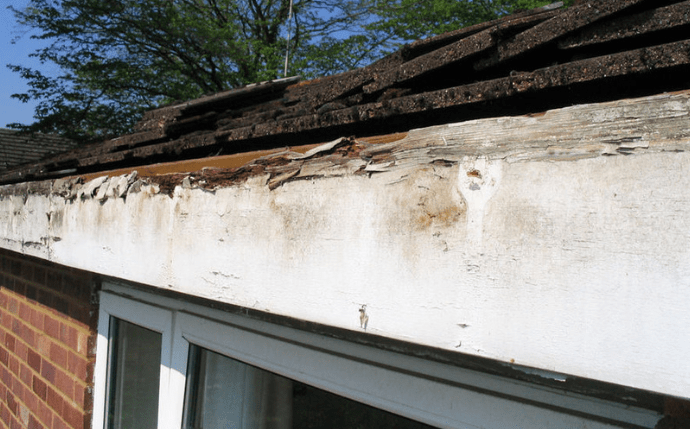
One of the most common is fascia damage. When water repeatedly overflows or backs up behind the gutter, the wood behind it stays wet longer than it should. Paint starts to peel. The wood softens. Fasteners lose grip. By the time the sag becomes visible from the yard, the problem has usually been there for a while.
Foundation stress is another concern. Gutters do not waterproof a basement on their own, but they play a direct role in keeping roof runoff from concentrating at the base of the house. If a clogged system dumps water beside the foundation during every storm, the soil there swells and contracts more dramatically. Over time, that can contribute to settlement issues, seepage, or hydrostatic pressure against foundation walls. Not every wet basement starts with gutters, but enough do that it is one of the first things worth checking.
Then there is winter. In New Jersey conditions, trapped water can freeze inside a clogged gutter or at the roof edge. Once ice forms, it blocks drainage further and adds more weight. Ice dams are complicated and involve insulation, ventilation, and roof temperature, but clogged gutters make the situation worse. The water has nowhere to go, so it lingers where cold air keeps it frozen and where thawing can push moisture back under shingles.
People also underestimate pest activity. Gutters full of debris hold moisture and create shelter for insects. Birds may pull from the debris for nesting. In some situations, rodents use overgrown gutter lines and low roof edges as travel routes. A clean, freely draining system removes one more appealing habitat around the home.
Signs your gutters are not moving water properly
You do not always need to climb a ladder to spot trouble. Many warning signs show up at eye level if you know what to look for. Overflow marks on siding are one clue. Another is a trench in the mulch or soil directly below the gutter edge. Plants getting hammered by runoff in one bed while the rest of the yard looks normal is another sign.
Watch the gutters during a real rain if you can do so safely from the ground. That is often more revealing than any dry-weather inspection. Water should move toward the downspouts without spilling at the seams or pouring over the front edge. If one section behaves like a waterfall while the rest drains normally, you likely have a localized clog or a pitch issue.
Here are a few signals that warrant attention:
- Water spilling over the gutter edge during ordinary rain
- Downspouts that drip weakly or not at all in a storm
- Gutters pulling away from the fascia or visibly sagging
- Dark streaks on siding beneath gutter joints
- Pooled water near the foundation after rainfall
A single sign does not always mean severe damage, but it usually means the system is no longer doing its job efficiently.
Timing matters more than strict calendar dates
People often ask how many times per year gutters should be cleaned. The honest answer depends on the property. A heavily treed lot may need service more often than a home with minimal tree cover. A one-story ranch is easier to keep an eye on than a steep-roofed colonial with upper runs hidden from view. The right schedule comes from the house, not a generic rule.
That said, Hackettstown homes often benefit from at least one thorough cleaning after the fall leaf drop and another inspection or cleaning in late spring. Fall service clears the biggest seasonal load before winter weather arrives. Spring service addresses seed pods, twigs, and anything that winter storms moved into the system. On some properties, especially those with pine trees overhead, midsummer touch-ups are worthwhile because needles build up steadily and can clog outlets even when the troughs do not look full.
It is also smart to check after major wind events. Branch fragments and roof grit can collect in a single storm. A gutter that was clear last month can become restricted in one bad afternoon.
What proper cleaning actually involves
Good gutter cleaning is more than scooping out visible leaves. The obvious debris is only the first layer. The finer material matters just as much because it is the part most likely to compact near the outlets and slow the water.
A thorough service usually includes clearing all gutter runs by hand or with specialized tools, bagging or removing the debris, flushing the channels to verify movement, and checking that each downspout is open from top to bottom. If a downspout is clogged, it may need to be disassembled at a lower elbow or cleared with water pressure in a controlled way. The goal is not just a clean-looking gutter. The goal is confirmed flow.
Experienced cleaners also notice what many homeowners cannot easily see from the ground. They look for separated seams, missing spikes or loose hangers, improper slope, rusted sections, and evidence of overflow patterns. Those observations matter because cleaning alone does not fix a structural defect. Sometimes a homeowner is frustrated that the gutters were “just cleaned” but still overflowed in the next storm. The reason is often not leftover debris. It is a pitch problem, a crushed downspout, or a capacity issue on a roof section that collects a lot of water.
On older homes, cleaning can uncover fragile areas that need gentle handling. Brittle sealant, thinning metal, or rotted fascia can all show up once the debris is removed. That is another reason professional judgment matters. The work is not just about forcefully clearing everything out. It is about doing it without turning a maintenance visit into a repair bill.
The difference between a quick rinse and a real fix
A surprisingly common mistake is assuming that if water runs out somewhere, the system must be fine. I have seen gutters sprayed from one end until water dribbled from the downspout, but that did not prove the line was truly clear. Partial clogs can still pass some water. The issue only becomes obvious when a hard rain overwhelms that restricted flow and sends the excess over the side.
A real fix accounts for volume, not just movement. The system should be able to handle a sustained storm, not merely trickle after a garden hose test. That means every outlet should be open, every downspout should discharge effectively, and the gutter should be pitched so water does not sit in the run after the storm passes.
This is where local experience helps. Homes on sloped lots, homes with long roof valleys, and homes with additions often have drainage patterns that are not obvious until you study the roofline. One section may carry far more water than the rest. If that section also sits beneath overhanging branches, it becomes the trouble spot every season. A cleaner who has worked on many homes in the area will usually spot that pattern quickly.
When gutter guards help, and when they disappoint
Gutter guards come up in almost every conversation about maintenance. They can be useful, but they are not magic. The best way to think about guards is that they may reduce the type and amount of debris entering the gutter, yet they do not remove the need for inspection and occasional cleaning.
On some Hackettstown properties, especially where larger leaves are the main issue, a well-matched guard can help keep the troughs clearer between services. On other properties, particularly under pine trees, needles and fine debris can accumulate on top of the guards or work their way into openings. Then the system still needs attention, just in a different form. Some guard styles also make it harder to inspect what is happening underneath, which can delay the discovery of hidden buildup.
Another trade-off is compatibility with the existing gutter condition. Guards installed on a gutter that already has poor pitch, loose fasteners, or damaged fascia do not solve the underlying problem. They simply cover it. That is why it makes sense to clean and assess the system first, then decide whether guards fit the site conditions and the homeowner’s maintenance goals.
Safety is not a side issue
Ladder work is where many do-it-yourself gutter projects go wrong. The problem is not only height. It is the combination of height, awkward reach, slippery debris, and the temptation to overextend rather than climb down and reposition. Even single-story homes can produce bad falls. Two-story and walkout properties add another layer of risk because the grade may drop away sharply from one side of the house.
Professional crews do not eliminate risk, but they manage it with the right ladders, stabilizers, footing, and work habits. They also know when conditions are poor, such as after a freeze, during wind, or on soft ground after heavy rain. That kind of judgment is hard to replace with enthusiasm and a borrowed extension ladder.
For homeowners who still prefer to monitor things themselves, there are safer ways to stay informed. Walk the perimeter after storms. Check where downspouts discharge. Look for splash marks and erosion. Watch for plants bent by runoff. Those clues can tell you a lot without leaving the ground.
Choosing a service that understands drainage, not just debris
If you are hiring out Gutter Cleaning Hackettstown, the cheapest option is not always the best value. The difference between a rushed pass and a careful service often shows up in what happens after the next rain. A competent provider should be able to explain how they verify downspouts, what they do with debris, whether they inspect for pitch or fastening issues, and what limitations they see in the current system.
It is reasonable to ask practical questions before scheduling:
- Do they clear and test downspouts, not just scoop the troughs
- Will they note loose hangers, separated seams, or drainage defects
- Do they clean up debris from the property afterward
- Are they comfortable working on the home’s height and roofline
- Can they explain whether guards, repairs, or extensions might help
That short conversation usually reveals whether you are dealing with a true maintenance professional or someone doing the bare minimum.
Small adjustments that improve runoff after cleaning
Once the gutters are clean, a few targeted improvements can make the system work better. Downspout extensions are one of the simplest. If the water exits only a foot or two from the foundation, the gutter may be doing its job while the drainage pattern still creates problems. Extending discharge farther into the yard, toward a swale, or into an approved drainage solution often helps immediately.
Splash blocks can be useful on some sites, though they are not ideal everywhere. On level ground they can spread water reasonably well. On steeper grades they sometimes shift or allow water to cut around them. The right choice depends on the lot. That is the kind of detail homeowners appreciate once they have watched how one strong storm actually behaves on their property.
Trimming branches back from the roof edge also pays off. It reduces the amount of debris entering the gutters and limits abrasion from limbs rubbing during wind. Better sun exposure can help damp sections dry more quickly, which slows the formation of sludge.
Even roof condition plays a role. Aging shingles shed more granules, and those granules settle in gutters where they collect near outlets. If a home is due for roof work soon, it can make sense to coordinate gutter service around that timing rather than treating the systems as unrelated.
Better flow now means fewer repairs later
Clean gutters are one of those maintenance items that rarely get praise when done on time, because nothing dramatic happens. Water goes where it should. The siding stays cleaner. The beds do not wash out. The basement stays drier. The fascia lasts longer. That quiet performance is exactly the point.
For homeowners in Hackettstown, the combination of seasonal debris and variable weather makes routine attention worthwhile. Gutter Cleaning Hackettstown is less about chasing leaves and more about protecting the entire runoff path from roofline to ground. When that path stays open, the house handles rain the way it was designed to. When it does not, the costs spread into places that are far more expensive than a cleaning appointment.
A well-maintained gutter system does not call https://www.google.com/maps/place/Just+Gutters+LLC/@40.8508764,-74.8265083,829m/data=!3m2!1e3!4b1!4m6!3m5!1s0xa4048db2dc8e9c0b:0x377ff42dc31c35fe!8m2!3d40.8508764!4d-74.8265083!16s%2Fg%2F11vqhqxmff!5m1!1e1?entry=ttu&g_ep=EgoyMDI2MTExMC4wIKXMDSoASAFQAw%3D%3D attention to itself. It simply manages the next storm, and the one after that, without asking the rest of the house to absorb the consequences.
Just Gutters LLC
Address: 262 Main St, Hackettstown, NJ 07840
Phone number: +12013319454
FAQ About Gutter Cleaning Hackettstown
How much should a gutter clean cost?
Professional gutter cleaning typically costs between $163 and $333, with a national average of around $210 to $250 for a standard-sized home.
What months should you clean gutters?
You should clean your gutters twice a year—once in late autumn (November to December) and once in late spring (April to May).
Is it worth paying for gutter cleaning?
Yes, paying for gutter cleaning is worth it because it prevents thousands of dollars in water damage, roof leaks, and structural repairs.